
NEDIC Dartmouth
Snap-on dentures
An implant-secured smile with the convenience of a removable denture.
Request a consultation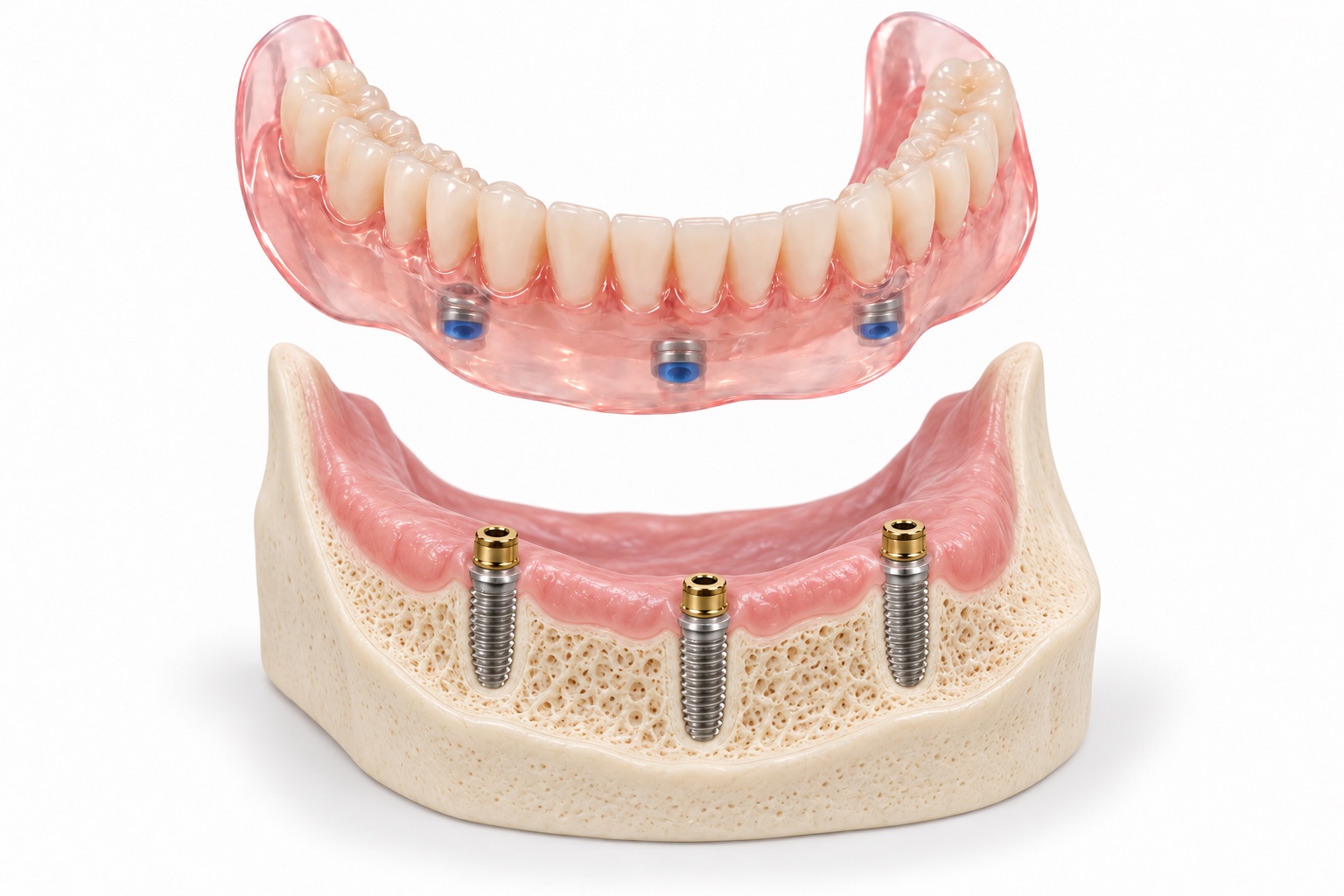
Understand your treatment
What is a snap-on denture?
A snap-on denture attaches to dental implants through small retention components. It is designed to reduce denture movement while allowing you to remove it for cleaning.
The implants remain in your jaw. The denture connects to them with attachments and inserts that require periodic maintenance. The number and position of implants depend on your treatment plan.
The NEDIC approach
How we plan your care
NEDIC brings implant planning and denture design together. Your doctor and in-house laboratory team consider how the teeth look, how the bite meets, and how the denture will attach.
Review your mouth and your goals
We assess your bone, gums, bite, health history, and any existing denture. We explain the recommended implant plan and whether a new denture is needed.
Place the implants
Your doctor completes the planned surgery. We explain what to wear during healing and how to protect the treatment area.
Fit the attachments and denture
Once the implants are ready, we connect the retention components and fit the denture. We check how it seats, releases, and meets your bite.
Practice your daily routine
We show you how to insert, remove, and clean the denture and how to care for the implant attachments.
Your goals
What you can expect
- A more secure smile compared with a regular denture resting on the gums.
- Improved chewing ability with implant retention.
- No denture adhesive needed for the implant-secured attachment.
- A denture you can remove for daily cleaning.
Your result and treatment timeline depend on your starting condition, healing, and ongoing care. We review realistic expectations with you before treatment.
After treatment
Caring for your smile
Clean the denture and implant attachments as instructed, and keep your follow-up appointments. Retention inserts wear with use and may need replacement. Your denture may also need adjustments or other maintenance as your mouth changes.
Let’s talk about your treatment.
Ask questions, understand your options, and review a plan for your care.
← Back to dental implant solutions